
Kim, Yong-Ha
Editors Note:
I recently bit the bullet and started using GPT-5 to translate some non-English sources I have been drawing on, pending a proper translation job (If anyone wants to do it, please let me know! I know of some academic departments that could get you paid). While not my ideal scenario, it is a big improvement on my old method, which used Google Translate to formulate search terms in languages I don’t speak and then using it to sort through and interpret results. Doing this helped me find several important sources, most notably Ichikawa Hakugen. I believe that Kim Yong-ha’s work in Shin Chae-ho represents another important step forward into Korean Buddhist Anarchism. Shin Chae-ho is particularly interesting because he represents a type of Buddhist Anarchist that is not well represented in this work so far, that of the revolutionary militant strongly influenced by Buddhism as a basis for his militancy. Unless they were obviously Buddhist, like Uchiyama Gudō, these characters can be more difficult to discover without careful reading and interpretation of both their thought and biography, such as Kim Yong-ha has accomplished. I hope that this provisional translation is enough to get people interested in learning more about Shin Chae-ho and the struggles of revolutionary Buddhists on the Korean peninsula in the 20th Century.
Abstract
After his exile to China, Shin Chae-ho experienced daily life as a monk. During this period, he read the Vimalakīrti-nirdeśa Sūtra (維摩經) and The Awakening of Faith in Mahāyāna (大乘起信論). He attempted to combine nationalism with anarchism, but became disillusioned as both domestic and international circumstances worsened. Unable to rely on conventional political ideologies, he turned increasingly to Buddhist scriptures.
Taking these biographical facts into account, this paper investigates the aspects of Buddhist anarchism reflected in Shin Chae-ho’s Declaration of the Korean Revolution. The declaration advocates a national popular revolution, including destruction and violence as revolutionary means. However, this perspective alone cannot fully explain the declaration’s intellectual features. From the standpoint of Buddhist anarchism, this paper analyzes how the declaration reflects Buddhist thought—particularly ideas found in the Vimalakīrti Sūtra, which Shin studied intensively.
Shin Chae-ho empathized deeply with the suffering of the people and sought to aid them. His practice of Mahāyāna Buddhism was grounded in the concept of emptiness (空). Thus, the declaration renders null the imperialism and colonialism of modern Japan, creating a “world of emptiness” for the Korean people. For this reason, Shin proclaimed destruction and violence as revolutionary means. His revolutionary direct action can be understood as a bodhisattva practice.
Keywords: Vimalakīrti Sūtra, Bodhisattva, Emptiness, Destruction, Violence
1. Introduction
Jeong In-bo (pen name Widang) once remarked:
“Dan-jae possessed an exceptionally profound understanding of Buddhist studies beyond historiography. He was capable of comprehending such sutras as the Vimalakīrti and Śūraṅgama at a level unsurpassed among lay intellectuals of his time. He was especially fond of the Vimalakīrti Sūtra, often urging friends to read it, and he deeply studied Aśvaghoṣa’s Awakening of Faith in Mahāyāna.”
After completing his monastic life at Gwaneumsa Temple, Shin joined the armed independence organization Damuldanaround late 1924. He associated with figures such as Yi Hoe-yeong, Kim Chang-suk, and Yu Ja-myeong, and personally authored the Damuldan Manifesto, though the text no longer survives. These facts indicate that Shin underwent a Buddhist experience in the early 1920s.
This period is significant because it provides a key to understanding his ideological transition from nationalism to anarchism during the 1920s. His use of Buddhist imagination in fictional writing during this period suggests that Buddhist thought also permeated his non-fictional political writings.
2. Buddhism and the Ideological Background of the Declaration
Shin Chae-ho became spiritually disillusioned as he witnessed conflicts within the independence movement. During the 1920s, he lived as a monk, reading Buddhist scriptures in order to overcome psychological trauma. Recognizing the limitations of nationalism, he sought a new theoretical direction and discovered anarchism.
His nationalism and anarchism were grounded in Buddhist experience. Through encounters with the Vimalakīrti Sūtra and Awakening of Faith, he internalized the principle of saving sentient beings (중생 구제). In particular, his understanding of the Vimalakīrti Sūtra led him to view modern violence through the lens of emptiness and to seek a people’s direct revolution analogous to Buddhist compassion.
3. Samsara, Emptiness, and Revolutionary Consciousness
The Buddhist concept of samsara (윤회) derives from the prefix sam (“together”) and the verbal root sri (“to flow, move, wander”), meaning “flowing together,” “wandering,” or “transformation of life.” Samsara refers to the continuous cycle of rebirth governed by karma. Human beings circulate through the three realms—the realm of desire, the realm of form, and the formless realm—according to their actions.
From Shin’s perspective, the Korean people were trapped in samsara, suffering under colonial oppression. Liberation required not metaphysical escape, but ethical and revolutionary awakening. Individual awareness of social injustice enables liberation from the karmic cycle of suffering.
4. Violence, Destruction, and the Bodhisattva Ethic
Shin argued that a people’s revolution without violent force could not succeed. Past movements—the Gapsin Coup, righteous armies, the acts of An Jung-geun and Yi Jae-myeong, and even the March First Movement—failed because they lacked a unified popular base and a violent core.
Violence was not an end in itself, but a necessary means of destroying the structures of oppression: colonial rule, privileged classes, economic exploitation, and cultural enslavement.
“The path of revolution must be opened through destruction. Yet destruction is not undertaken merely to destroy, but to build. If one does not know how to build, one does not know how to destroy.”
This dialectic of destruction and construction parallels the Buddhist doctrine of non-duality (不二) in the Vimalakīrti Sūtra, where oppositions dissolve into an integrated whole.
5. Buddhist Anarchism and the People
The people (민중), as concrete manifestations of sentient beings, were the true agents of revolution. Shin viewed the masses not as passive victims, but as bodhisattva-like actors capable of transforming the world through direct action.
Buddhist anarchism, as applied here, emphasizes:
- Non-attachment
- Resistance to authority
- A naturalistic worldview akin to ecological thought
Anarchism’s resistance to authority mirrors the Zen maxim that one must “kill the Buddha” to become a Buddha—destroying external authority to realize self-liberation.
6. Conclusion
Shin Chae-ho’s Declaration of the Korean Revolution can be characterized as revolutionary nationalism incorporating anarchist methods. Through Buddhist experience—especially his engagement with the Vimalakīrti Sūtra—he discovered an ideological bridge between nationalism and anarchism.
Ultimately, the declaration aims to nullify the violent imperialist order of modern Japan and to unite the Korean people through revolutionary destruction and violence, understood as a bodhisattva practice grounded in emptiness.
References
Shin, Chae-ho (申采浩). Declaration of the Korean Revolution (朝鮮革命宣言). 1923.
Shin, Chae-ho. Collected Works of Danjae Shin Chae-ho (丹齋申采浩全集). Seoul: Dongguk University Press.
Jeong, In-bo (鄭寅普). Widang Collected Works (爲堂全集). Seoul: Minjoksa.
Vimalakīrti-nirdeśa Sūtra (維摩詰經). Translated into Classical Chinese by Kumārajīva.
Aśvaghoṣa. The Awakening of Faith in Mahāyāna (大乘起信論).
Kim, Yong-ha. “The Relationship between Shin Chae-ho’s Nationalism and Anarchism.” Journal of Korean Modern Thought, vol. XX, no. X.
Kim, Yong-ha. “Buddhist Thought in Shin Chae-ho’s Revolutionary Ideology.” Journal of Korean Religious Studies, vol. XX, no. X.
Jeong, Gyeong-ok. “Anarchism and Religion in Modern Korea.” Korean Journal of Intellectual History, vol. XX.
Park, Chan-seung. Studies on Korean Anarchism (한국 아나키즘 연구). Seoul: Iljisa.
Lee, Young-ho. Buddhism and Modern Korean Thought (불교와 한국 근대사상). Seoul: Minjoksa
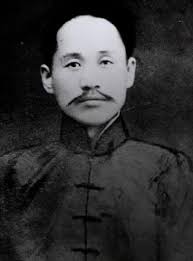
Original Korean Article:
 No Selves, No Masters